Assessor's Parcel Number (APN): What Every Contractor Needs to Know (2026)
Every permit application asks for it. Every property record is organized by it. Most homeowners have never heard of it. The assessor's parcel number — APN — is the single most important identifier in property and permitting, and contractors who don't understand it lose time on every project.
APN stands for Assessor's Parcel Number (sometimes called the parcel number, assessor's identification number, or property ID). It's a unique number the county tax assessor assigns to every piece of land in their jurisdiction. Think of it as a Social Security number for property — no two parcels share the same APN, and every official record about that land is filed under it.
This guide explains what APNs are, how the numbering works, how to find the parcel number for any property, why contractors specifically need it, and the common APN mistakes that delay permit applications.
What Is an Assessor's Parcel Number?
The county assessor's office is responsible for valuing all taxable property in the county. To do this systematically, they divide the entire county into individual parcels — every lot, every piece of land — and assign each one a unique identifier. That identifier is the APN.
The APN appears on:
- Property tax bills — it's the primary reference number
- Permit applications — almost every building department requires it
- Title reports and deeds — the legal description references the APN
- Zoning verification letters — tied to the parcel
- Utility connection applications — water, sewer, power
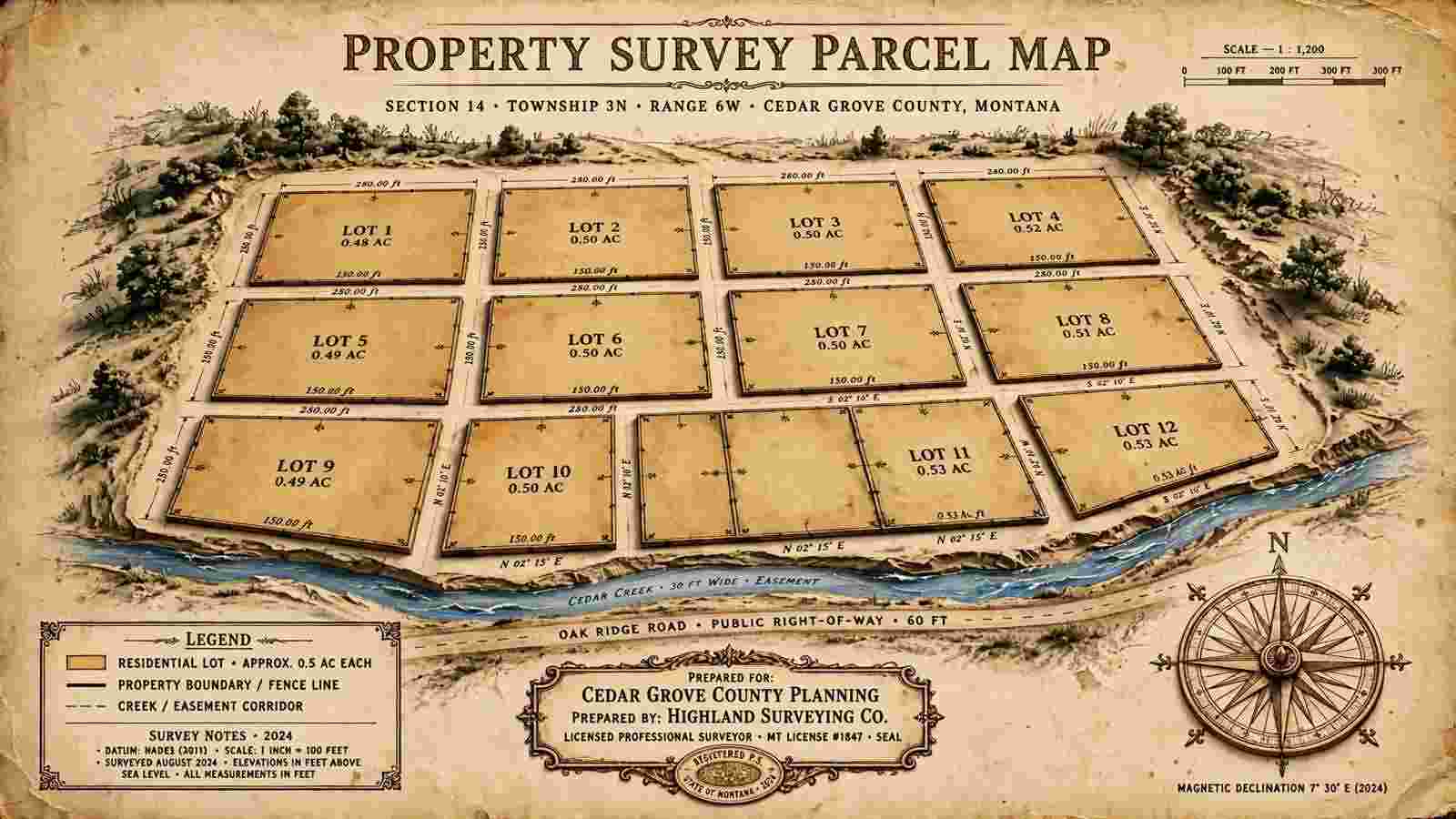
- GIS and parcel maps — the searchable index
Why it matters more than the street address: Street addresses change. Streets get renamed, properties get readdressed, new developments don't have addresses yet. The APN is permanent — it follows the land regardless of what the street is called. When a building department looks up your project, they're looking up the APN, not the address.
For vacant land and new developments, the APN is often the only identifier available. If you're building on a lot that doesn't have a street address yet, the APN is how everyone — the building department, the utility companies, the surveyor — refers to the property.
How APN Numbers Work (The Format)
There's no national APN format. Every county designs its own numbering system, which is why APNs look different everywhere you go. But most follow a similar logic: the number encodes geographic information.
Common formats:
- California: Typically 10 digits in a XXX-XXX-XX-XX pattern (e.g., 123-456-78-90). The segments represent the map book, page, block, and individual parcel.
- Florida: Varies by county — often 15+ digits encoding township, range, section, and subdivision data from the Public Land Survey System.
- Texas: Varies enormously — some counties use simple sequential numbers, others use complex geographic codes. Texas has 254 counties, each with its own system.
- New York: Called "SBL" (Section-Block-Lot) in many areas — e.g., Section 12, Block 34, Lot 56.
What the segments usually mean:
- Map book / atlas page — which large-scale map contains this parcel
- Block — the city block or subdivision section
- Lot / parcel — the individual property within the block
- Sub-parcel — for condos, splits, or further divisions
You don't need to decode the APN. The segments are for the assessor's internal organization. What matters is that you have the complete, correct number — every digit, every hyphen in the right place.
How to Find a Parcel Number for Any Property
There are several reliable ways to look up an APN. Here they are, from fastest to slowest:
1. County assessor website (fastest, free)
Almost every county has an online property search. Google "[county name] assessor parcel search" or "[county name] property lookup." You can usually search by:
- Street address
- Owner name
- Map (click on the parcel)
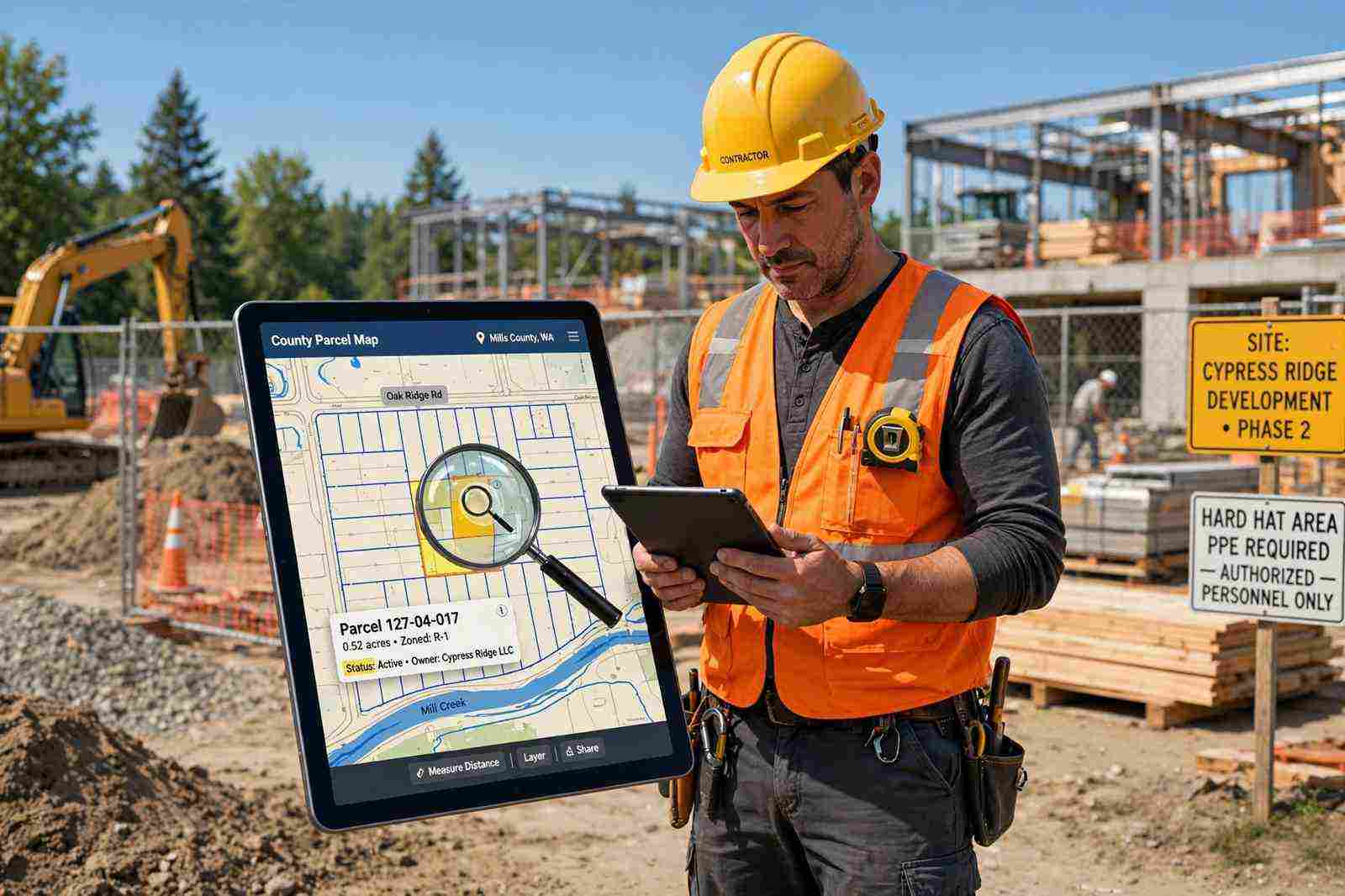
The results show the APN, assessed value, lot size, zoning, and often a parcel map. Bookmark the assessor sites for every county you work in — you'll use them constantly.
2. County GIS / interactive map (best for visual confirmation)
GIS (Geographic Information System) maps let you visually locate the property and click to see its APN, boundaries, zoning overlay, floodplain status, and aerial imagery. Search "[county name] GIS" to find it. GIS maps are invaluable for confirming you're looking at the right parcel — especially for vacant land or properties with unclear addresses.
3. Property tax bill
If the owner has a recent tax bill, the APN is printed prominently on it — usually at the top. Ask the property owner for a copy during project onboarding.
4. Title report
The preliminary title report (which the owner or lender orders) always includes the APN as part of the legal description. If a title report exists for the project, the APN is in it.
5. Call the assessor's office
For tricky situations — newly subdivided lots, parcels in transition, discrepancies between sources — call the assessor's office directly. They can confirm the current APN and tell you if a parcel split or lot line adjustment is in process.
6. Permit Warden AHJ directory
The Permit Warden AHJ directory links to 186 building department and county portals across all 50 states — many of which connect directly to assessor parcel lookup systems.
Why Contractors Specifically Need the APN
Homeowners can get by without knowing their APN. Contractors can't. Here's where it comes up in your daily work:
Permit applications
Almost every building permit application requires the APN. The building department uses it to pull up the property's full history: previous permits, violations, zoning classification, floodplain status, and outstanding fees. An incorrect APN can route your application to the wrong property file — causing delays while the department sorts out the confusion, or worse, associating your permit with someone else's violations.
Verifying property details before bidding
Before you bid, look up the APN on the assessor's site and GIS map. You'll discover:
- Lot size and dimensions — is the project feasible on this lot?
- Zoning classification — does the zoning allow the proposed work?
- Existing structures — what's already on the property per official records?
- Open violations — are there code violations that need resolution?
- Floodplain or special districts — which trigger additional permits (see our permit types guide)
This five-minute lookup can reveal deal-breakers before you've invested hours in a bid.
Detecting unpermitted work
Compare the assessor's records (bedrooms, bathrooms, square footage, structures) against what's actually on the property. Discrepancies often indicate unpermitted additions or conversions. If the assessor shows a 2-bedroom house and you're looking at four bedrooms, someone added space without permits — and that affects your project scope, timeline, and liability.
Utility connections
Water, sewer, gas, and electric utilities all use the APN to identify the service location. New service applications, capacity upgrades, and meter installations reference the parcel number.
Lot splits and mergers
When a property is subdivided, each new parcel gets a new APN. When parcels are merged, the old APNs are retired and a new one is issued. During transitions, the APN may be in flux — the assessor's records might show the old configuration while the new parcels aren't yet numbered. Always verify the current APN directly with the assessor for recently divided or merged properties.

Common APN Mistakes That Delay Permits
These errors are small, common, and disproportionately expensive in lost time:
1. Transposing digits
APNs are long strings of numbers. It's easy to swap two digits when copying from a tax bill to a permit application. The building department's system won't match the wrong number to any property — or worse, it'll match a different property. Always copy-paste the APN; never retype it. If you must type it, read it back digit by digit.
2. Using an outdated APN
After a lot split, merger, or boundary adjustment, the APN changes. Old documents (previous permits, old title reports, the owner's memory) may reference the retired number. Always verify the current APN on the assessor's website — don't trust a number from a five-year-old document.
3. Confusing APN with other numbers
Properties accumulate identifiers: APN, permit numbers, case numbers, tract numbers, zoning case numbers. They're all different. The APN is specifically the assessor's number. If the application asks for the APN and you enter the building permit number from a previous project, the application will be kicked back.
4. Missing parcel suffixes
Some APNs include suffixes for condominiums, airspace parcels, or sub-parcels (e.g., -001 vs -002). Omitting the suffix can point to the wrong unit or an incomplete record. Include the full APN exactly as the assessor lists it.
5. Assuming the address is enough
"I gave them the address — isn't that sufficient?" Not always. Many permit application systems use the APN as the primary key. An address without an APN may trigger a manual lookup by department staff, adding days to processing. Provide both, every time.
6. Not checking for multiple parcels
Large properties, assemblages, and phased developments often span multiple APNs. If the project covers more than one parcel, every APN must be listed on the application. Missing one means part of the project isn't permitted.
APN Lookup by State: What to Expect
While every county is different, here are patterns you'll see in major states:
California: The most standardized system. Search "[county] assessor parcel search" — most counties have excellent online tools. APNs follow the XXX-XXX-XX-XX format. The state's 58 counties each maintain their own site.
Florida: Property appraiser (not "assessor" — Florida uses the term "property appraiser") websites are generally excellent. Search "[county] property appraiser." Florida APNs are long and encode PLSS data.
Texas: The most fragmented. 254 counties, 254 different systems. Larger counties (Harris, Dallas, Tarrant, Bexar, Travis) have good online tools. Smaller counties may require a phone call. Texas calls the office "Central Appraisal District" (CAD) in most counties.
New York: NYC uses the Department of Finance's ACRIS system (Block and Lot numbers). Upstate counties vary. Long Island uses the SBL system.
Arizona: The assessor's parcel search is straightforward — Maricopa County (Phoenix) has one of the best online tools in the country.
General rule: Larger, more populous counties have better online tools. Rural counties may have limited online records — call them. The Permit Warden AHJ directory can point you to the right county portal.
APN vs. Legal Description vs. Address
These three identifiers serve different purposes, and permit applications may ask for any or all of them:
| Identifier | What it is | Example | Changes? |
|---|---|---|---|
| Street address | Postal location | 123 Main St | Yes — streets get renamed |
| APN | Assessor's unique ID | 123-456-78-90 | Only on lot changes |
| Legal description | Survey-based description | "Lot 12, Block 3, Oak Hills Subdivision" | Almost never |
The legal description is the most precise — it's what appears on the deed and defines the exact boundaries. The APN is the most practical for daily use — it's short, searchable, and connects to every database. The address is the most human-readable but the least reliable as an official identifier.
For permit applications: Provide the APN and the street address at minimum. Include the legal description if the application asks for it (commercial and subdivision projects usually do).
Putting It All Together: The APN in Your Workflow
Here's how APN fluency fits into a contractor's project workflow:
- Bidding: Look up the APN → check zoning, lot size, violations, unpermitted work on the assessor's site and GIS
- Pre-construction: Verify the current APN is correct → include it on every permit application → check for multiple parcels
- Permitting: Use the APN to track application status in the building department's portal → reference it in all correspondence
- Inspections: Inspectors pull up the property by APN — having it ready speeds up every interaction
- Closeout: The certificate of occupancy and final records are filed under the APN — confirming the correct APN ensures your project's records are clean
The APN is a small detail that touches everything. Contractors who treat it as routine — verify it, copy-paste it, include it everywhere — avoid an entire category of administrative delays. Contractors who treat it as an afterthought learn about it the hard way, one kicked-back application at a time.
Frequently Asked Questions
Is the APN the same as the parcel number?
Yes — "APN," "parcel number," "assessor's parcel number," and "property ID" generally refer to the same thing: the unique identifier the county assessor assigns to a property. Terminology varies by state (Florida says "property appraiser," New York City says "Block and Lot"), but the concept is identical.
Can two properties have the same APN?
No. Each APN is unique within its county. However, the same numeric APN might exist in different counties — APNs are only unique within the issuing county's system. Always pair the APN with the county name to avoid confusion.
How do I find the APN if I only have the owner's name?
Most county assessor websites allow searching by owner name. Enter the last name (and first name if common) to get a list of matching properties, then identify the correct one by address. Be careful with common names — verify by address before using the APN.
What if the APN on the tax bill doesn't match the assessor's website?
Trust the website — it reflects the current records. The tax bill may be from before a lot split, merger, or reassessment. If the discrepancy persists or the website seems wrong, call the assessor's office. Don't guess; an incorrect APN on a permit application causes real delays.
Do I need the APN for a renovation permit on a house with an existing address?
Yes. Even for straightforward residential remodels, most building departments require the APN on the application. It's how they pull up the property's permit history, verify zoning, and check for open violations. The address alone isn't sufficient in most online application systems.
The APN is the key that unlocks every property record that matters to your project. Look it up early, verify it's current, and use it everywhere. And while you're organizing project details, track every permit deadline in one place — free to start.