Certificate of Occupancy: The Complete Guide for Contractors (2026)
You've finished the framing, passed the rough inspections, installed the fixtures, and painted the last wall. The client is asking when they can move in. Before anyone sleeps a single night in that building — or opens it for business — one document has to exist: the certificate of occupancy, usually called the CO.
In construction, "CO" doesn't mean "change order" (though it can, confusingly). When inspectors, lenders, and building departments say CO, they mean the certificate of occupancy — the official paper that says a building is safe, code-compliant, and legal to occupy. No CO, no move-in. No CO, no final payment in most contracts. No CO, no business license in many cities.
This guide covers everything a contractor needs to know: what a certificate of occupancy actually is, the different types, when you need one, the step-by-step process to get it, what inspectors check, how long it takes, what it costs, and what happens if you skip it. If you've ever lost sleep over a delayed CO holding up a closing date, this is for you.
What Is a Certificate of Occupancy?
A certificate of occupancy is a legal document issued by your local building department — the Authority Having Jurisdiction (AHJ) — certifying that a building complies with all applicable building codes, zoning laws, and approved plans, and is safe for people to occupy.
Think of it this way: the building permit gave you permission to build. The certificate of occupancy gives the owner permission to use what you built. The permit is the starting gun; the CO is the finish line.
The document itself is usually simple — a page or two listing the property address, the owner, the type of occupancy (residential, commercial, mixed-use), the approved use, the maximum occupant load, and the issuing official's signature and date. But behind that simple page sits the entire inspection history of the project.
What "occupancy" means here: In code language, "occupancy" doesn't just mean people living somewhere. It refers to the use classification of a building — residential, business, assembly, mercantile, industrial, institutional, and so on. The CO states which occupancy classification the building was approved for. A space approved as a retail store can't legally operate as a restaurant without a new CO (or an amended one), because restaurants have different fire, ventilation, and plumbing requirements.
The CO is tied to the building, not the contractor. Once issued, it generally stays with the property even when ownership changes — unless the use changes or the building is substantially altered.
Why the Certificate of Occupancy Matters So Much

For contractors, the CO matters for reasons that go well beyond paperwork:
It's usually a contract milestone. Most construction contracts tie final payment — often 5 to 10 percent of the total contract value, the retainage — to "substantial completion" or directly to CO issuance. A delayed CO means delayed final payment. On a $500,000 project, that's $25,000 to $50,000 sitting in someone else's account while you wait.
Lenders require it. If the project has construction financing, the lender's conversion from a construction loan to permanent financing almost always requires a CO. No CO, no conversion, and the borrower keeps paying construction-loan interest rates.
Insurance depends on it. Property insurance policies typically require the building to be legally occupied. A fire in a building occupied without a CO can give the insurer grounds to deny the claim.
The client can't move in or open for business. For commercial projects, every day without a CO is a day of lost revenue for the owner — and guess who they'll blame. Residential buyers can't close on a mortgage without it in most jurisdictions.
It protects you. The CO is proof that the work passed inspection. If a dispute arises later about whether the building was code-compliant at handover, the CO is your strongest evidence.
Types of Certificates of Occupancy
Not every CO is the same. Depending on your jurisdiction and project status, you might encounter several types:
Final Certificate of Occupancy
This is the real thing — the permanent CO issued when all work is complete, all inspections have passed, and every requirement is satisfied. This is what everyone means when they say "we got the CO."
Temporary Certificate of Occupancy (TCO)
A TCO allows partial or temporary occupancy while minor outstanding items are finished. Common scenarios:
- The building is substantially complete and safe, but landscaping, punch-list items, or exterior work isn't done
- A commercial tenant needs to move in equipment while final touches are completed
- Seasonal deadlines (a retail store needs to open before the holidays)
TCOs have expiration dates — typically 30 to 90 days, sometimes renewable. They come with conditions: the building must be safe for the approved partial use, and the remaining work must not affect life safety. Not every jurisdiction issues TCOs, and some charge a separate fee for them.
Contractor tip: If your contract has liquidated damages for late completion, a TCO can be a lifesaver — it may count as substantial completion even though the final CO isn't issued yet. Make sure your contract defines this clearly.
Conditional Certificate of Occupancy
Similar to a TCO but issued with specific conditions attached — for example, occupancy is allowed provided certain systems are monitored, or provided the remaining work is completed by a set date. The terminology varies by jurisdiction; some places use "conditional" and "temporary" interchangeably.
Certificate of Continued Occupancy / Certificate of Compliance
Some cities (notably in New Jersey and parts of New York) require a certificate of continued occupancy when a property changes hands, even without new construction. An inspector verifies the property still meets code before the sale closes. If you're doing renovation work tied to a property sale, check whether this applies.
Amended Certificate of Occupancy
When the use of a building changes — say, converting a warehouse to apartments, or a retail space to a restaurant — the existing CO no longer covers the new use. You'll need an amended (or entirely new) CO reflecting the new occupancy classification. This typically requires going through plan review and inspections for the changed areas.
When Do You Need a Certificate of Occupancy?
Requirements vary by jurisdiction, but you generally need a CO (or an amended CO) when:
- New construction is completed — any new building intended for occupancy
- The use or occupancy classification changes — warehouse to residential, office to restaurant, single-family to multi-family
- Major renovations or additions — especially those affecting structural, fire safety, or egress systems
- A building was constructed without permits and is being legalized retroactively
- A TCO is expiring and you need the final CO
When you typically DON'T need a new CO:
- Cosmetic remodels that don't change the occupancy classification (new kitchen cabinets, paint, flooring)
- Like-for-like replacements (new roof, new HVAC unit of the same type)
- Minor repairs
The gray area: This is where contractors get in trouble. A "minor" renovation in one city requires a new CO; in the next city over, it doesn't. Always check with the specific AHJ. The Permit Warden AHJ directory links to 186 building department portals across all 50 states where you can verify local requirements.
How to Get a Certificate of Occupancy: Step by Step

The process follows a predictable sequence in most jurisdictions. Here's how it typically works:
Step 1: Complete all permitted work
Every item on the approved plans must be finished — or at least, every item required for the occupancy you're requesting. If you're applying for a TCO, the life-safety items must be complete even if cosmetic items aren't.
Step 2: Pass all required final inspections
This is the heart of the process. Depending on the project, you'll need sign-offs from multiple inspectors:
- Building/structural final — framing, drywall, finishes match approved plans
- Electrical final — panels labeled, outlets and fixtures installed, smoke/CO detectors in place
- Plumbing final — fixtures set, water heater installed correctly, backflow preventers in place
- Mechanical/HVAC final — system operational, ductwork complete, ventilation per plan
- Fire final — sprinklers, alarms, extinguishers, exit signage, fire separations
- Zoning final — setbacks, parking, landscaping, signage comply with zoning approval
- Health department (for restaurants, food facilities) — separate inspection and approval
- Public works/engineering — sidewalks, driveways, drainage, utility connections
Each inspection must be requested, scheduled, and passed. A single failed inspection can restart the clock.
Step 3: Submit the CO application
Once inspections are passing, submit the formal application to the building department. This usually requires:
- The completed application form
- The building permit number
- Proof that all inspections passed (the department usually has this in their system)
- As-built drawings if the final construction deviated from approved plans
- Special inspection reports (for structural steel, concrete, soils — if applicable)
- Energy compliance documentation (Title 24 in California, IECC forms elsewhere)
- The application fee
Step 4: Final review and issuance
The building official (or their designee) reviews the complete file. If everything checks out, the CO is issued — sometimes same-day, sometimes after a review period of several days to a couple of weeks.
Step 5: Post the CO
Many jurisdictions require the CO to be posted in a visible location in the building — near the main entrance or electrical panel. Commercial buildings often need it framed and displayed. Keep a copy in your project files too.
Final Inspections: What Inspectors Actually Check
The final inspection is not a casual walkthrough. Inspectors work from checklists derived from the building code, and they're thorough because their signature goes on the line. Here's what gets the most scrutiny:
Life safety systems (the big ones):
- Smoke detectors and carbon monoxide alarms — correct locations, interconnected, powered
- Fire sprinklers — coverage, pressure, alarm connection
- Fire extinguishers — correct type, mounted, accessible, charged
- Exit signage and emergency lighting — illuminated, correct placement
- Egress paths — clear, properly sized, doors swing correctly, hardware works
- Fire-rated separations — between units, between garage and living space, around mechanical rooms
Electrical:
- Panel schedules match actual circuits, all breakers labeled
- GFCI protection where required (kitchens, bathrooms, exteriors, garages)
- AFCI protection in bedrooms (per current code cycle)
- All outlets, switches, and fixtures installed and functional — no open boxes
Plumbing:
- All fixtures set and caulked, water connected, drainage functional
- Water heater — strapped, vented, T&P valve with proper discharge
- Backflow prevention on irrigation and boiler feeds
General:
- Address numbers visible from the street (yes, this fails inspections)
- Handrails and guardrails — height, spacing, graspability
- Stair dimensions — riser height and tread depth within tolerance
- Final grade and drainage — water flows away from the building
The number one cause of failed finals: incomplete work. Inspectors hate being called out to a site that isn't ready. Every failed inspection costs you the re-inspection fee (typically $50–$200) and — more importantly — days or weeks waiting for the next available slot. Don't schedule the final until the site is genuinely ready. Walk it yourself first with fresh eyes.
How Long Does It Take to Get a CO?
Honest answer: it depends enormously on where you are and how prepared you are.
Best case: In a well-run suburban building department with online scheduling, a straightforward residential project can go from "final inspections requested" to "CO issued" in 1 to 2 weeks.
Typical: 2 to 4 weeks for residential, 4 to 8 weeks for commercial. This accounts for scheduling lead times, one round of corrections, and administrative processing.
Worst case: Major cities with backlogged departments can take 2 to 6 months. New York City's process is notoriously slow. Complex commercial projects with multiple agencies involved (fire marshal, health department, DOT) take longer everywhere.
What actually drives the timeline:
- Inspection scheduling backlog — the single biggest variable. Some departments book 2–3 weeks out.
- Failed inspections and corrections — each cycle adds a week or more.
- Multi-agency coordination — fire, health, zoning, and public works each have their own queues.
- Incomplete applications — missing energy forms, missing special inspection reports, unsigned documents.
- Plan deviations — if the built work doesn't match approved plans, you'll need revised drawings approved before the CO issues.
What you can control: Schedule inspections the moment work is ready (don't batch them out of convenience), pre-walk every inspection area, have all paperwork assembled before you apply, and build relationships with the inspection staff. A contractor who consistently delivers ready sites gets faster service — inspectors remember.
What Happens If You Occupy Without a Certificate of Occupancy?
Short version: nothing good. The consequences escalate quickly:
Fines and penalties. Most jurisdictions fine property owners (and sometimes contractors) for occupancy without a CO. Fines range from a few hundred dollars to thousands per day. In New York City, occupying without a CO can trigger fines of $800 to $4,000 — and the Department of Buildings doesn't negotiate much.
Stop-work or vacate orders. The building department can order the building vacated until a CO is obtained. Imagine telling your client they have to move out of the building you just finished.
No insurance coverage. As mentioned earlier, insurers can deny claims for buildings occupied without a required CO. A fire or flood in an un-CO'd building can be financially catastrophic.
Lender problems. The construction lender can call the loan or refuse to convert to permanent financing.
Legal liability for the contractor. If you hand over a building knowing it lacks a CO and someone is injured, your liability exposure increases dramatically. Your contract should make CO issuance (or the owner's responsibility to obtain it) explicit.
Criminal charges (rare but real). In extreme cases — particularly where occupancy without a CO leads to injury or death — criminal negligence charges are possible.
The bottom line: Never advise a client to "just move in, the CO is coming." If the client insists, document your objection in writing. Your license and your business are worth more than their moving schedule.
Certificate of Occupancy vs. Other Permits
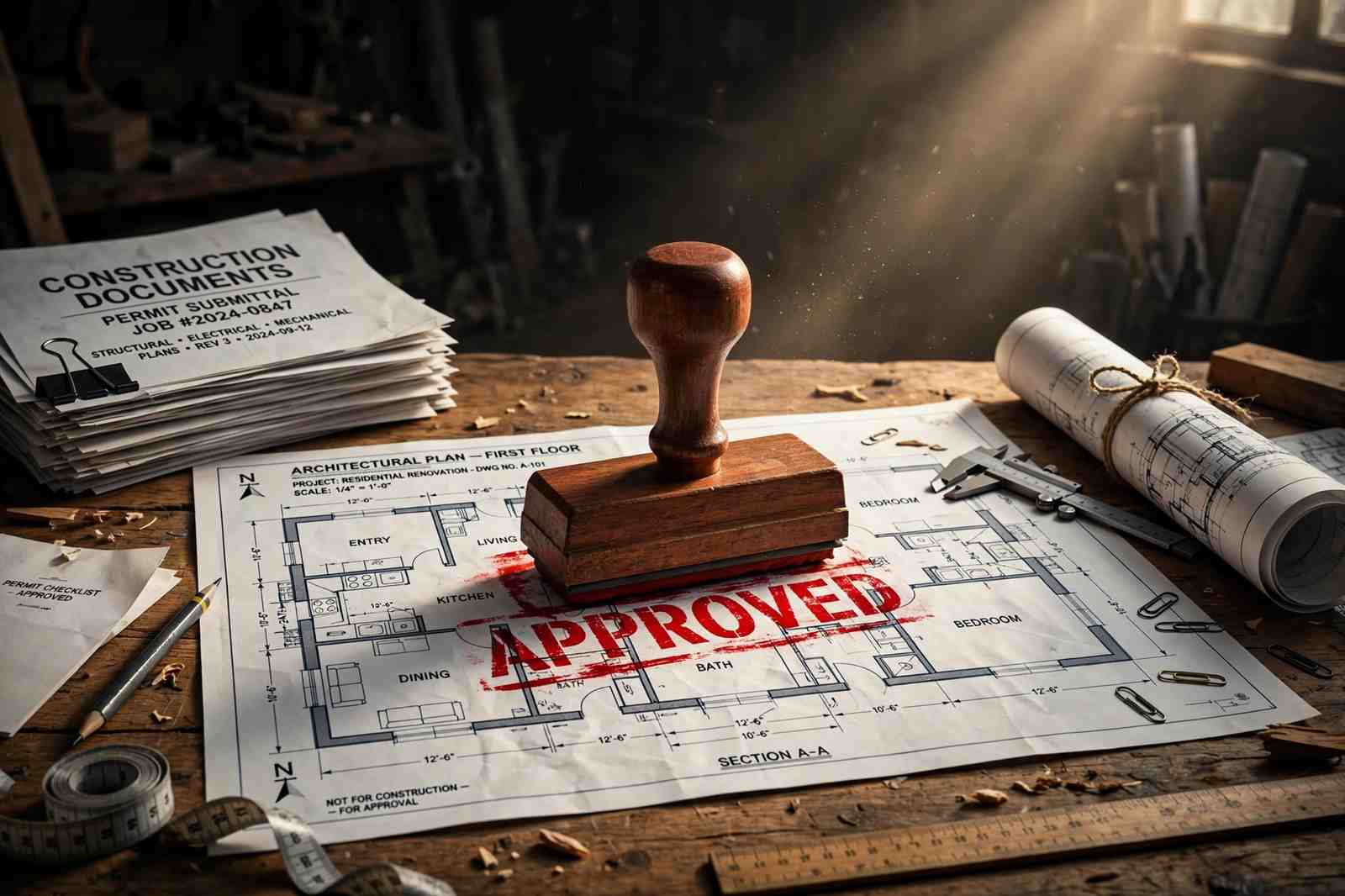
Contractors sometimes confuse the CO with other documents. Here's how they differ:
| Document | What it does | When it's issued |
|---|---|---|
| Building permit | Authorizes construction to begin | Before work starts |
| Inspection sign-offs | Confirm specific phases meet code | During construction |
| Certificate of occupancy | Authorizes the building to be used | After all work and inspections |
| Certificate of completion | Confirms work is done (some jurisdictions) | May substitute for CO on certain project types |
| Business license | Authorizes commercial activity | Often requires a CO first |
| Use and occupancy permit | Similar to CO (terminology varies by state) | Pennsylvania and some other states use this term instead |
"Use and Occupancy" permits: If you work in Pennsylvania, you'll hear "U&O" instead of "CO." It's the same concept — the local municipality certifies the property meets code for its intended use. Don't let the different name confuse you.
Common Reasons COs Get Delayed or Denied
After talking to contractors across the country, the same culprits come up again and again:
-
Failed final inspections — the site wasn't truly ready. The most common failures: missing smoke/CO detectors, unlabeled electrical panels, incomplete grading, missing address numbers.
-
Open permits on the property. If a previous contractor pulled a permit years ago and never closed it out with a final inspection, the building department may refuse to issue a new CO until the old permit is resolved. Always check for open permits before starting a project — this one surprises even experienced contractors.
-
Unpermitted work discovered during inspection. The inspector notices the deck, the converted garage, or the added bathroom that was never permitted. Now you're dealing with retroactive permits on top of the CO.
-
Zoning non-compliance. The building is fine, but the parking count is short, the setback is wrong, or the signage exceeds what's allowed. Zoning issues can't be fixed with a hammer — they may require variances, which take months.
-
Missing paperwork. Energy compliance forms, special inspection reports, as-built drawings, contractor affidavits. The building is perfect; the file is incomplete.
-
Fire marshal or health department holdouts. The building department is ready, but the fire marshal hasn't signed off, or the health department hasn't approved the kitchen. These agencies run on their own timelines.
-
Fee balances. Outstanding permit fees, re-inspection fees, or impact fees must be paid before issuance. Check the balance before you apply.
CO Requirements Vary by City and State
There is no national certificate of occupancy standard. Every AHJ sets its own rules, and they differ in meaningful ways:
- Some jurisdictions don't issue COs at all for single-family residential — they use final inspection sign-off as the equivalent. Others require COs for everything.
- New York City has one of the most complex CO systems, with detailed occupancy classifications and a searchable online database of every building's CO history.
- New Jersey requires certificates of continued occupancy on property transfers — a separate inspection regime from new-construction COs.
- California ties CO issuance to Title 24 energy compliance documentation, which adds a paperwork layer other states don't have.
- Florida requires COs to account for hurricane-code compliance (HVHZ requirements in Miami-Dade and Broward).
This variation is exactly why tracking deadlines and requirements by jurisdiction matters. A contractor working across city or county lines needs to know each AHJ's CO process, inspection scheduling system, and fee schedule. The Permit Warden AHJ directory connects you to 186 building department portals across all 50 states.
How to Keep Your CO (and Every Other Deadline) on Track
Here's the uncomfortable truth about CO delays: most of them are preventable. They're caused by missed inspection windows, forgotten paperwork, expired permits, and deadlines nobody was watching. The contractors who get COs on time aren't luckier — they're more organized.
That's exactly what Permit Warden was built for. Instead of tracking permit expirations, inspection deadlines, and renewal dates on spreadsheets, whiteboards, or memory:
- Every permit and deadline in one dashboard — building permits, inspection windows, TCO expirations, license renewals
- Automatic reminders before anything expires — 90, 60, 30, and 7 days out
- AHJ portal links — jump straight to the right building department for scheduling
- Multi-project tracking — because you're never working on just one job
The CO is the finish line of every project. Don't let a missed deadline move it.
Frequently Asked Questions
How much does a certificate of occupancy cost?
CO fees vary widely by jurisdiction and project size. Residential COs typically run $50 to $500. Commercial COs can range from a few hundred to several thousand dollars depending on square footage and complexity. TCOs often carry separate fees. Always check the current fee schedule with your AHJ — fees change, and outdated information is worse than no information.
Can I sell a property without a certificate of occupancy?
It depends on the jurisdiction and the circumstances. In many places, you can sell, but the buyer (or their lender) will require the CO before closing. In New Jersey and parts of New York, a certificate of continued occupancy inspection is required as part of the transfer. Selling without resolving CO issues usually means a lower price — buyers discount for the risk and hassle.
How do I look up whether a building has a certificate of occupancy?
Most building departments have online portals where you can search by address. New York City's DOB Building Information Search is the gold standard — every CO is viewable online. For other jurisdictions, check the Permit Warden AHJ directory for links to 186 local building department portals.
What's the difference between a certificate of occupancy and a certificate of completion?
A certificate of completion (issued in some jurisdictions, notably Florida) confirms that construction was completed per the approved plans. A certificate of occupancy goes further — it authorizes the building to be occupied. Some jurisdictions issue one document that serves both purposes. If your AHJ issues certificates of completion, ask whether a separate CO is also required.
Do I need a new certificate of occupancy for a remodel?
If the remodel doesn't change the occupancy classification or involve structural/fire-safety changes, usually not — the existing CO remains valid. But additions, use changes, and major renovations typically trigger a new or amended CO. When in doubt, ask the building department before you start. The cost of asking is zero; the cost of guessing wrong is a project shutdown.
The CO is the last document your project needs and the first one your client asks about. Get the inspections right, keep the paperwork tight, and never let a deadline sneak up on you. Start tracking every permit deadline free — your future self will thank you.