What Happens When a Building Permit Expires Before Inspection
Here's the direct answer: if your building permit expires before the required inspection takes place, you generally cannot legally continue the work until the permit is reinstated or reissued. Most building departments treat construction under an expired permit the same as construction with no permit at all — inspections cannot be scheduled against it, and continuing to build exposes the project to stop-work orders and penalties.
The exact consequences, recovery options, and costs vary by jurisdiction. Your local Authority Having Jurisdiction (AHJ) — the city or county building department that issued the permit — sets the rules, and no two AHJs handle expiration identically. This guide explains what typically happens, what your options are, and how to get the project moving again.
Why a Permit Can Expire Before Inspection Ever Happens

It sounds strange — how can a permit run out before anyone even inspects the work? — but it happens to contractors regularly, and usually for unremarkable reasons. Building permits are time-limited authorizations. Most AHJs attach two kinds of clocks to them: a commencement window (work must start within a set period after issuance) and a progress or abandonment window (once started, work must show continued progress, typically evidenced by passed inspections at reasonable intervals).
Expiration before inspection usually means one of these scenarios played out:
- Work never started in time. The project was delayed — financing fell through temporarily, the client changed the scope, materials were back-ordered, or the crew was tied up on another job — and the commencement window closed before the first shovel hit the ground.
- Work started but stalled. The foundation went in, then the project paused for weeks or months: weather delays, a subcontractor dispute, a client decision on hold, or simply a gap between phases. With no inspections happening, the abandonment clock kept running.
- Inspections were never scheduled. Sometimes the work is actually progressing but nobody called for the inspection — the rough framing is up but the framing inspection was never requested, and months slip by. In many jurisdictions, the permit measures "progress" through inspection activity, so un-inspected work looks identical to abandoned work on paper.
- The project changed hands. A contractor takes over a half-finished job and inherits a permit that's already closer to expiration than anyone realized — or already lapsed.
None of these involve bad intent. They involve busy schedules, handoffs between people, and deadlines that were written on a permit card nobody looked at after day one.
What "Expired" Actually Means
An expired permit is not a suspended permit, and the distinction matters. A suspension pauses the authorization temporarily, usually for a correctable issue, with a defined path back. An expiration means the authorization has ended. The permit number still exists in the building department's records, but it no longer authorizes any work on the site.
Practically speaking, expiration means:
- The permit cannot be used to schedule inspections. When you (or your inspector) look up the permit number, it shows as expired or closed — the inspection request will be rejected or never accepted.
- Work performed under it has no legal cover. If work continued after the expiration date, that work was technically performed without a valid permit, even if the permit was perfectly valid when the work began.
- The conditions and approvals attached to the original permit — approved plans, granted variances, fee calculations — may or may not carry over to whatever comes next. Some AHJs honor the original approval for a grace period; others start from zero. This varies by jurisdiction, so ask directly.
The single most useful thing you can do is check the permit's current status in the AHJ's online portal or with a phone call to the building department. Don't guess, and don't assume a permit "probably" still has time left. The status is a matter of record — look it up.
The Immediate Consequences
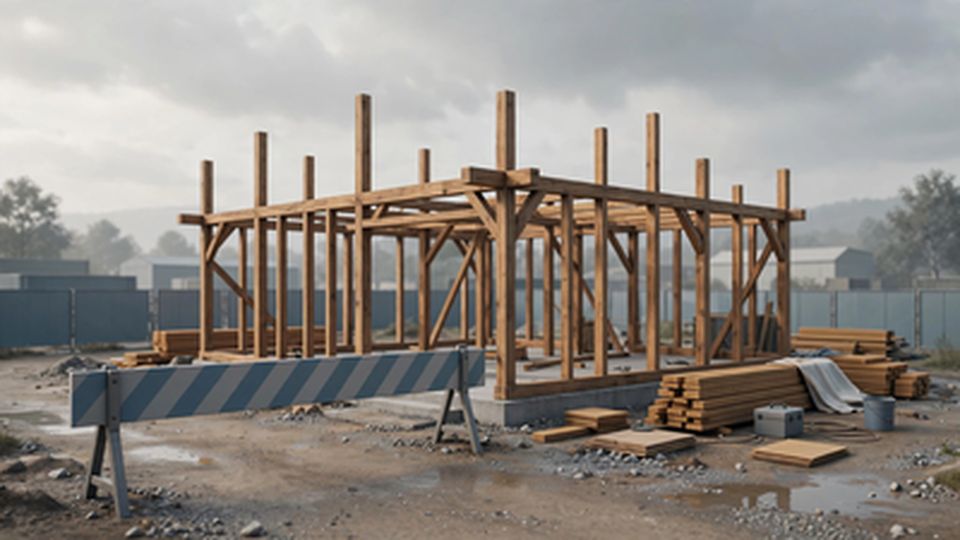
Once a permit has expired, the consequences land in a fairly predictable order:
1. All work must stop
This is the non-negotiable part. Continuing construction under an expired permit is treated by most AHJs the same as building without a permit. That doesn't mean a violation is automatic — it means the legal protection the permit provided is gone, and any enforcement action available for unpermitted work is now on the table.
2. No inspections can proceed
This is the part that confuses people most. You might think: "Fine, the permit expired, but the work is done — can't the inspector just come look at it?" Generally, no. Inspectors inspect under the authority of a valid permit. An inspector who shows up to a site with an expired permit will typically refuse to perform or sign off on the inspection, because there is no active authorization to inspect under. The inspection has to wait until the permit situation is resolved.
3. Stop-work orders become possible
If the building department discovers active work under an expired permit — through a complaint, a drive-by, or an inspector visit — a stop-work order is the standard response. A stop-work order freezes everything until the permit issue is resolved and any required penalties or corrective actions are addressed. Even the possibility of one is enough reason to halt voluntarily the moment you discover the expiration.
4. The schedule slips, and the slip compounds
Here's where the real cost lives. Recovery isn't instant: reinstating or reapplying takes administrative time, the project sits idle, crews get reassigned, and the client starts asking hard questions. A permit that lapsed quietly on a Tuesday can easily cost weeks before work legally resumes.
Can an Inspector Still Sign Off on the Work?
Short answer: not under the expired permit. Inspectors need an active permit record to log results against, and their sign-off is what the certificate of occupancy or final approval is built on. Without a valid permit in the system, there is nothing to attach the inspection result to.
What an inspector can sometimes do — depending on the jurisdiction and the individual — is tell you informally what they'd want to see when a valid permit is back in place. That's useful intelligence for planning the recovery, but it is not an approval, and it doesn't substitute for the formal process. Get the permit fixed first; then schedule the inspection properly.
What Recovery Looks Like: Reinstatement or Reapplication
Once you've confirmed the permit is expired, you generally face two paths. Which one is available depends entirely on the AHJ:
Reinstatement or renewal (the easier path). Some building departments allow an expired permit to be reactivated — sometimes called reinstatement, renewal, or reissuance — particularly if the expiration was recent. This usually involves a written request or simple form, payment of a renewal or reactivation fee, and sometimes a fresh inspection of the current site conditions. There may be limits: one reinstatement only, or reinstatement only within a set window after expiration. Ask the building department what their policy is before assuming this option exists.
Full reapplication (the harder path). Many AHJs, especially after longer lapses, require a brand-new permit application. That means resubmitting plans, paying the full permit fee again (at current rates, which may have risen), and going back through plan review. If the jurisdiction has adopted a newer edition of the building code since the original permit was issued, the new application is typically reviewed under the new code — which can force changes to designs or even to work already completed.
Either way, document everything before you walk into the building department: the original permit number, issue date, inspection history (every passed inspection, with dates), photos of current site conditions, and a clear explanation of why the permit lapsed. A well-documented request moves faster than a vague one.
The Hidden Risk: Code Edition Changes
This is the consequence contractors underestimate most. Building codes update on regular cycles, and jurisdictions adopt new editions on their own schedules. If your original permit was issued under one code edition and you have to reapply years later under a newer one, the project may need to comply with requirements that didn't exist when the work was designed — or even when it was built.
The practical effects can include redesigned structural details, updated energy compliance documentation, new accessibility requirements, or changes to fire and life-safety provisions. In the worst case, already-completed work has to be modified or redone to meet the current code. This is not a penalty the AHJ is imposing on you personally; it's just how the system works when a permit lapses across a code cycle. It's also the strongest argument for never letting a permit expire in the first place: the cost of reapplication under a new code dwarfs the cost of a timely extension.
Impact on Schedule, Budget, and Client Relationships
Beyond the administrative recovery, an expired permit ripples through the whole project:
- Idle crews and remobilization. Workers get moved to other jobs; bringing them back takes time and costs money.
- Re-inspection of covered work. If work was covered (drywall up, concrete poured) after the permit expired — or even before, but without the required inspection — the AHJ may require it to be exposed again for inspection. Opening finished walls is expensive and demoralizing.
- Client trust. "The permit expired" is a difficult sentence to say to a client, because it sounds like something that should never happen. It damages confidence even when the underlying cause was a reasonable project delay.
- Lender and insurance complications. For financed projects, an expired permit can raise questions from lenders; for insurance, work performed without a valid permit can complicate coverage if something goes wrong.
None of this is meant to scare you — it's meant to calibrate the response. Discovering an expired permit is a "stop and fix it properly" situation, not a "hope nobody notices" situation. The contractors who recover fastest are the ones who halt work immediately, talk to the AHJ honestly, and follow the formal recovery process.
What To Do the Moment You Discover It
If you just realized a permit has expired — or might have — work through this sequence:
- Stop work on the affected scope. Don't finish "just this one thing." The line between permitted and unpermitted work is the expiration date, and crossing it makes everything worse.
- Verify the status. Check the AHJ's online permit portal or call the building department. Confirm whether the permit is expired, and if so, when it expired and what the recorded inspection history shows.
- Ask about reinstatement. Specifically ask: "Is reinstatement or renewal available for this permit, and what does it require?" Get the answer in writing or note who told you, when.
- Gather your documentation. Original permit, approved plans, every inspection record, dated site photos. If inspections were passed before expiration, those records are valuable — they prove how far the legitimate work got.
- Don't cover any more work. Until the permit is valid again and inspections are scheduled, keep everything visible and accessible.
How to Keep It From Happening Again
The prevention system is straightforward, which is exactly why it's frustrating that so many contractors lack one:
- Read the expiration terms on every permit the day it's issued. They're usually printed on the permit card or in the issuance letter. Note both the commencement deadline and the progress/abandonment rule.
- Log the dates immediately — in whatever system you actually use, not on a sticky note. Permit number, AHJ, issue date, expiration terms, date of last passed inspection.
- Set two alerts per permit: one well before the commencement deadline, one tied to inspection activity. A 30-day heads-up gives you time to act; a 7-day alert is your last chance.
- Treat inspection scheduling as deadline management. Since many jurisdictions measure progress through inspections, every passed inspection is also a permit-keeping event. Schedule the next inspection before the crew leaves the site.
Frequently Asked Questions
Can I still get a final inspection if my permit expired?
Not under the expired permit itself. You'll need to get the permit reinstated or reissued first, then schedule the inspection under the valid permit. Talk to the building department about the fastest path — reinstatement where available, reapplication where not.
Will I have to pay the permit fee again?
Often, yes — at least partially. Reinstatement usually carries a fee, and full reapplication typically means paying the current permit fee again. Fee structures vary by jurisdiction, so check the AHJ's published schedule rather than assuming.
Does expired-permit work have to be torn out?
Not automatically. The AHJ's concern is verifying that the work complies with the code — which may require exposing covered work for inspection, but doesn't necessarily mean demolition. The outcome depends on what was built, what was inspected before expiration, and what the current code requires.
What if the expiration was the previous contractor's fault?
If you took over the project, the expired permit is your problem now regardless of whose fault the lapse was. Verify permit status during project takeover, before you mobilize — inheriting a lapsed permit without knowing it is one of the most common ways contractors end up in this situation.
How long does recovery take?
It varies enormously: a simple reinstatement can move in days where the AHJ allows it, while full reapplication goes back through plan review queues and can take weeks. The complexity of the project and the AHJ's current workload are the biggest factors.
Keep Every Permit Deadline Visible
An expired permit is one of the most expensive preventable problems in construction — and it's preventable with nothing more exotic than writing the dates down and setting reminders. The contractors who never face this situation aren't luckier; they just have a system.
Permit Warden is that system: every permit, license, and inspection in one dashboard, with automatic renewal reminders before anything expires. Set it up once, and never discover a lapsed permit again.